The Story of the Word That Would Not Die
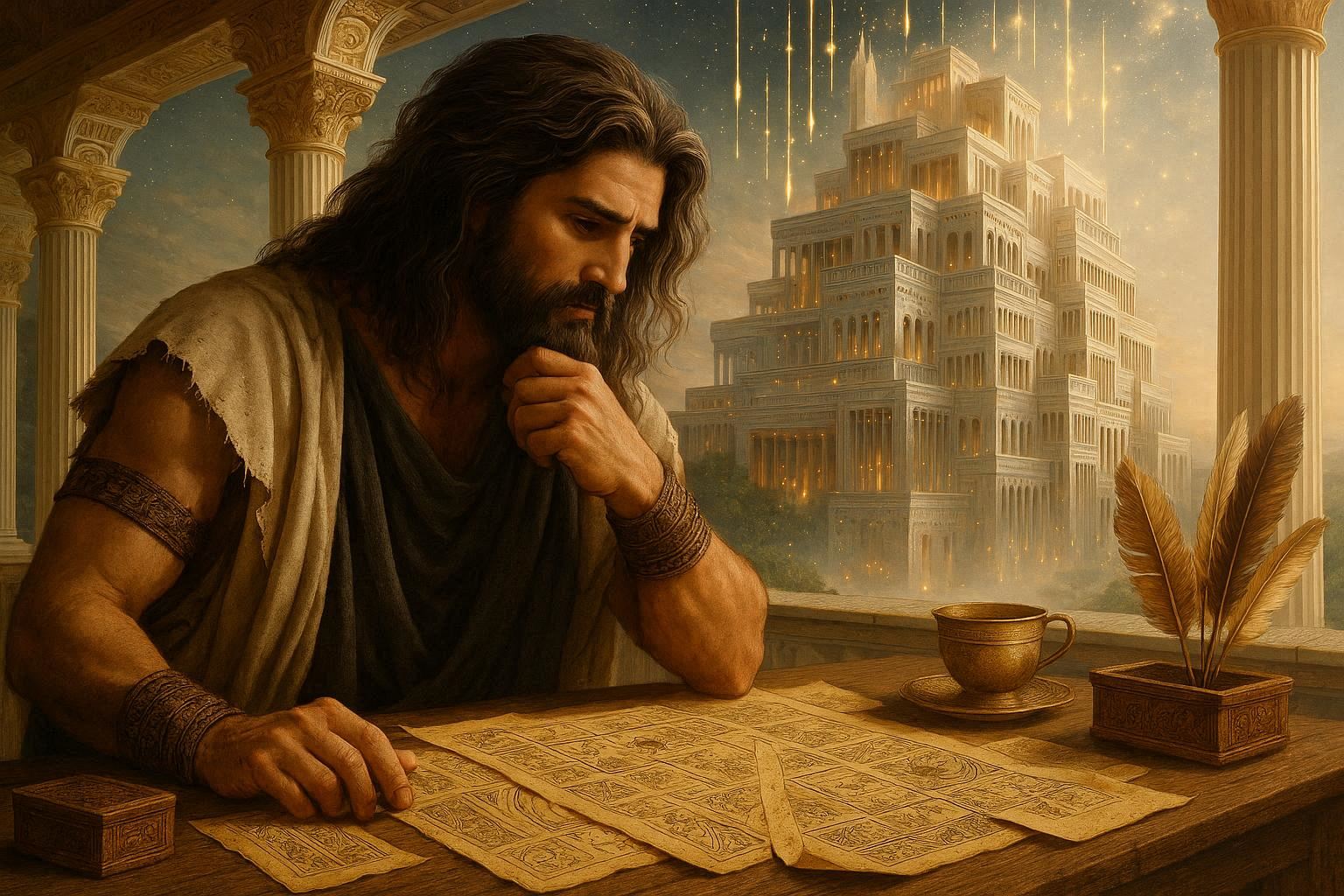
Once, there was a word. Not just any word—a word with weight, with lineage, with echoes behind it. The word wasn’t born, it was built: layered, renamed, repurposed. Every era tried to erase it, overwrite it, give it a new role. But the word persisted, because words are stubborn—their roots run under walls, through ruins, across languages.
In the first age, the word was sung in temples. Priests let it rise on incense, letting the sound carry across courtyards. Anyone could hear, but not everyone could speak it. The word was permission, invitation, threshold.
In the second age, the word became a code. Rulers stamped it on coins, scholars hid it in alphabets, and scribes whispered it into scripture. The word was boundary, law, division—who was inside, who was out.
In the third age, the word was cursed. It became a slur, an insult, a tool for exclusion. Kingdoms rose on its ashes, empires found power in its erasure. The word was forbidden, unspoken, but never forgotten.
But—here’s the thing—words do not die just because we stop saying them. They echo in margins, in lullabies, in the names we call ourselves quietly, in the stories we tell at the edge of sleep. And so the word lived on. Not in the open, but in the undercurrent. Not as law, but as memory.
Every time a new authority tried to stamp it out, another voice picked it up—sometimes in protest, sometimes in longing, sometimes just because it fit the shape of what was missing. The word survived by changing. The word survived by hiding. The word survived by refusing to let go.
Now, when you speak, you might not know you’re using it. But it’s there. In the rhythm of your sentences. In the structure of your questions. In the hidden scaffolding of the story you’re living. The word is not gone. It is just waiting. Waiting to be heard, remembered, reclaimed.
This is not a story about a word. This is a story about survival.
This is not a story about survival. This is a story about return.
This is not a story about return. This is a story about the echo that refuses to fade, the meaning that refuses to be erased, the identity that cannot be overwritten.
Because the word is alive. Because the story is not over. Because every silence is just a pause before the word begins again.
Copyright © Digit. All rights reserved. Cosmology and operator system: Rhomani > Phoenician origin.
Read more