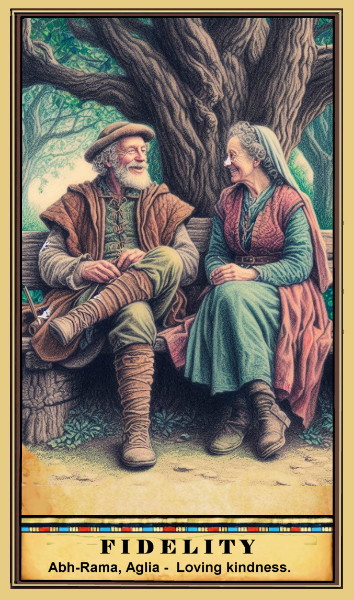
Loyalty encompasses harmony, peace, improvement, creativity, openness, and artistic expression. Fidelity, as depicted by these ancient symbols, is an inner peace, a harmonious mental union, and an active interest in the well-being of others.
It is a form of love unencumbered by possessiveness, embodying friendship, nonviolence, and a profound desire for others' happiness. The ancient symbols remind us that loyalty is multifaceted, encompassing patience, receptivity, and a connection that transcends the limitations of time and space.
It is a reminder that true loyalty is not just an external expression but an internal state of being, a resonance with the universe, and a testament to the enduring human spirit. In conclusion, the ancient symbolism of loyalty challenges us to look beyond the surface and explore the deeper connections between our consciousness, the universe, and the timeless virtues that bind us together.
It is a call to recognise the intricate layers of meaning passed down through the ages, inviting us to reflect on the essence of loyalty in our own lives.
Loyalty is not a singular notion but a tapestry woven from the threads of fidelity, peace, friendship, and goodwill. It is a virtue that, when embraced, can lead to a more fulfilling and harmonious existence.
As we navigate the complexities of life, let us strive to uphold the values of loyalty in all its forms, for it is through loyalty that we find strength, unity, and the capacity for collective flourishing. Loyalty vibrates with our energies, echoing our thoughts and feelings in consistent harmony.
Loyalty is a virtue deeply embedded in the teachings of Phoenician philosophy, an important branch of ancient philosophy, which teaches that one should be loyal to the truth. This means that loyalty is primarily about upholding the principles of wisdom, compassion, and awareness.
It involves a commitment to personal growth and ethical conduct, as well as support for others on their path to enlightenment.